
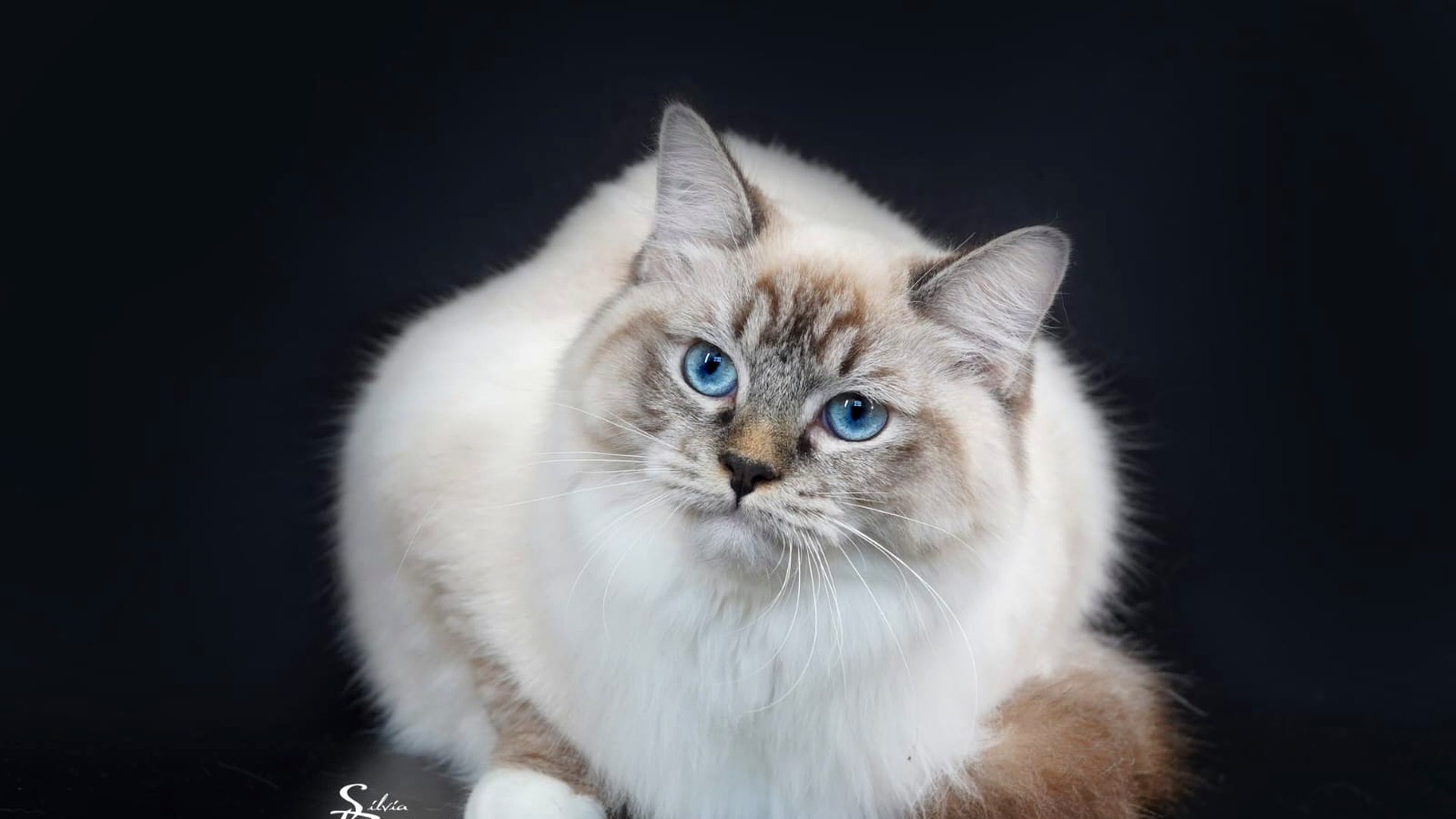
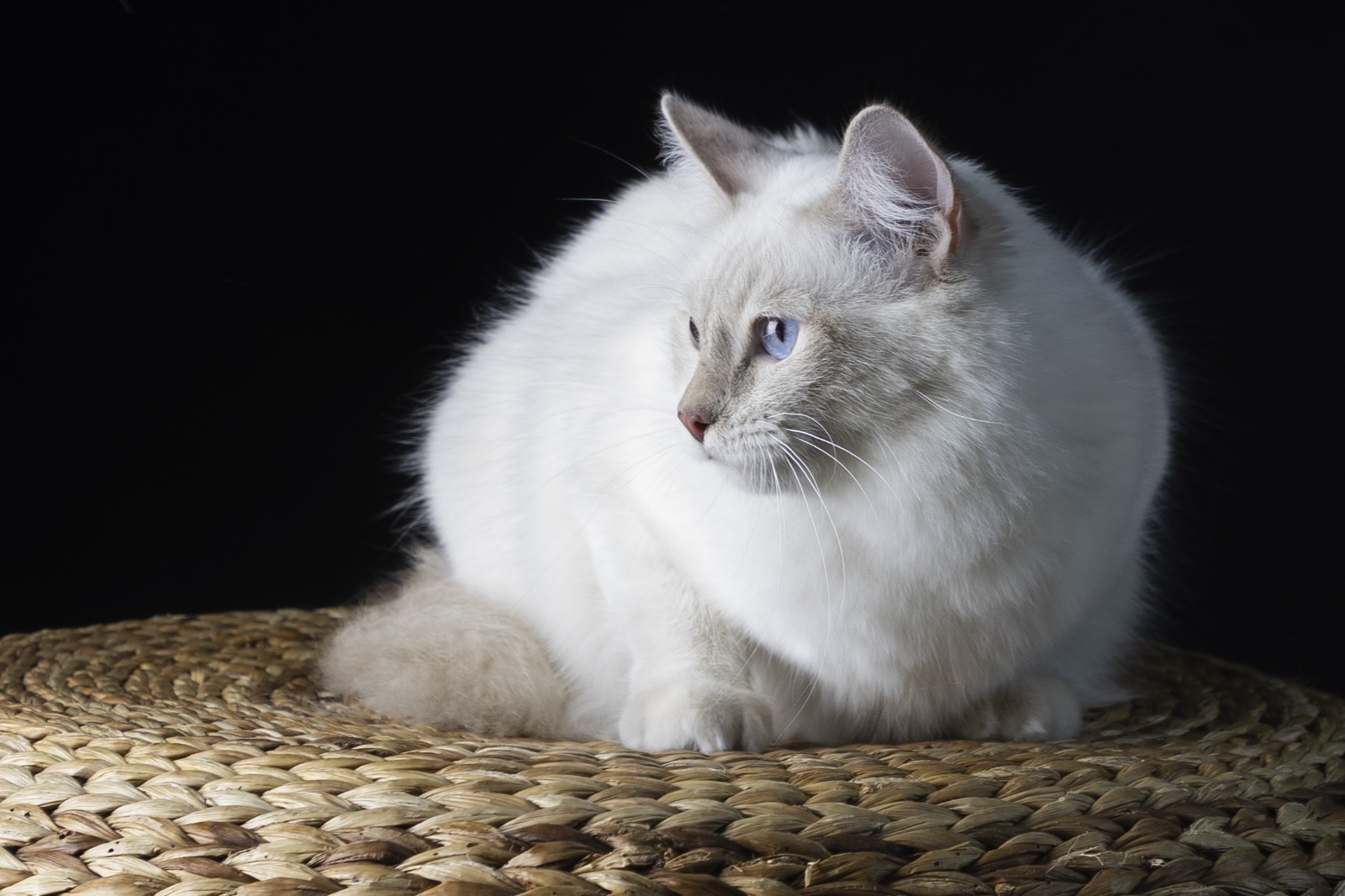
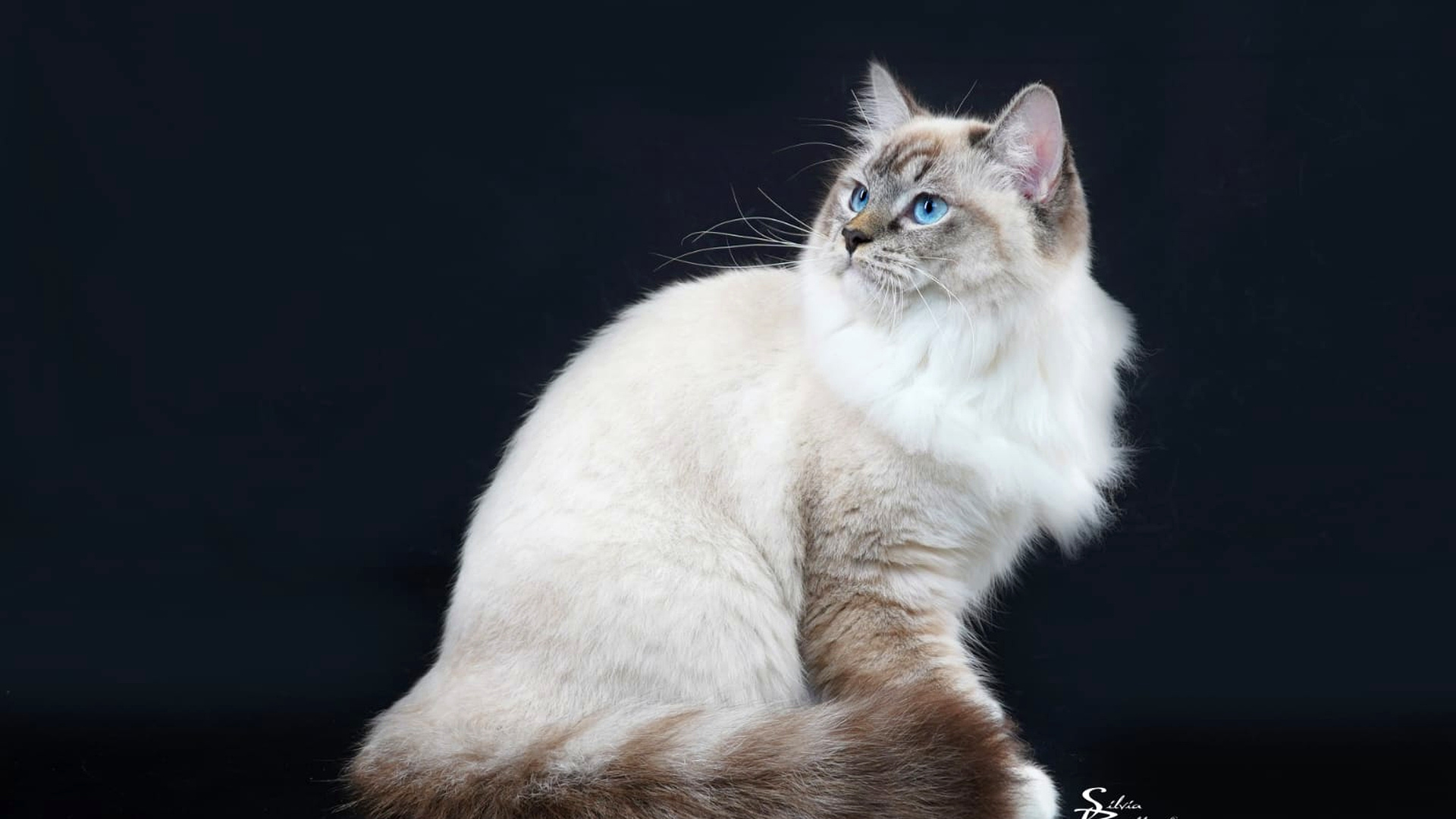
The Ragdoll breed originated in the United States during the 1960s, thanks to the selective breeding work of Californian breeder Ann Baker. Everything began with a white cat named Josephine, believed to be of Angora or Persian type, which was crossed with a male cat thought to be of Burmese origin. From these first pairings, kittens were born with an exceptionally gentle temperament, known for their ability to completely relax when held in someone’s arms — a distinctive trait that gave rise to the name “Ragdoll.”
By continuing the selective breeding of these character traits — such as sweetness, affection and a strong bond with humans — the breed was officially recognized. The Ragdoll received official recognition in the United States in 1971 and in Europe in 1987. In 1992, the Fédération Internationale Féline officially recognized the three standard varieties: bicolor, colourpoint and mitted. Today, the Ragdoll is widespread and highly appreciated throughout Europe, including Italy.
Pet kittens are male or female kittens intended exclusively for family life and placed with a spay/neuter agreement to be carried out once they reach adulthood. We do not place — and have never placed — kittens that are already sterilized, as we believe it is essential to respect the animal’s proper developmental timing.
Neuter show kittens are male or female kittens that conform to the breed standard and are suitable for participation in cat shows, but are not intended for breeding. They are placed with the obligation of spay/neuter once they have reached maturity.
Breeding kittens are male or female kittens selected for genetic, morphological and temperamental traits suitable for breeding. They are placed primarily with responsible and experienced breeders, often with greater availability of females.
Breeding and show kittens are highly selected individuals that fully conform to the breed standard, suitable both for a show career and for breeding. They are placed only after a careful evaluation of the receiving breeding program.
Kittens normally leave the cattery between 70 and 90 days of age, in accordance with proper physical and behavioral development timelines.
Kittens leaving the cattery around 70 days of age will have already received their first trivalent vaccination and at least one deworming treatment.
Kittens placed at around three months of age will have completed two trivalent vaccinations and received two or three internal antiparasitic treatments.